Uniradze Barrow Cemetery - A Trace of Ancient Cultures
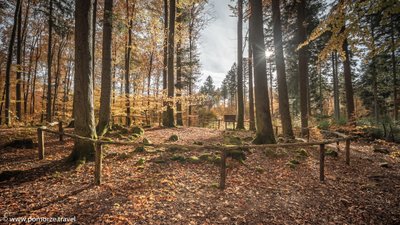
The Uniradze Barrow Cemetery, located in the Kashubian region of Poland in the Stężyca commune, is the largest archaeological site of its kind in Poland and one of the largest in Europe. It covers an area of about 6 km² on the eastern shore of Lake Raduńskie, where there are about 3000 barrows from various eras. The oldest of these barrows date back to the Bronze Age (around 1100-1000 BC), and the youngest to the early Middle Ages. The barrows in Uniradze are diverse - archaeologists distinguish four main types: from small, round mounds with a diameter of up to 3 meters, to monumental, over 15-meter mounds with a height of 2-3 meters. Inside them, stone urns with the ashes of the deceased were discovered, which in the Pomeranian culture were placed after cremation along with ornaments and ceramics. Sometimes, as in the case of a found braid of a young girl decorated with amber, the barrows hide peculiar artifacts. The cemetery has great religious and cultural significance - for over 2000 years it was a burial place for various communities. The nearby highest peak of Kashubia, Wieżyca, may have had a symbolic meaning, and the entire area may have been a ritual center. In Uniradze, you can also find so-called "face urns" - decorated ash urns with images of the deceased, which are evidence of the religious practices of Pomeranian culture, which extended from Pomerania to Silesia and Lublin.