The Church in Góra Pomorska - A History of the Parish and Local Disputes
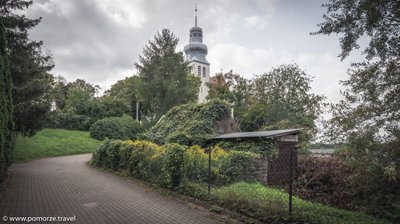
The church in Góra Pomorska, located in Kashubia, has a rich history dating back to the 12th century when the first parish was established. As the surrounding forests were cleared and new settlements were founded, the parish grew, encompassing villages such as Bolszewo, Kniewo, and Bieszkowice.
Originally, a wooden church stood at the center of the parish, but over time it fell into disrepair. In the 15th century, the nearby estates were owned by the Protestant Janowscy and Bolszewscy families, leading to numerous disputes with the Catholic clergy. As a result of these tensions, the parish did not always have its own priest. However, thanks to the support of the Wejher family, the renovation of the old wooden church began. It was during this time that Starosta Jan Wejher also founded a new settlement - Kniewo.
In the 17th century, the church faced additional challenges, such as wars and the Swedish invasion, which significantly weakened the parish's finances. In 1649, due to financial difficulties, the church in Góra was annexed to the parish in Wejherowo, which became the mother parish. Despite this, the wooden church remained an important place of worship for the local people.
At the end of the 19th century, with the growing number of parishioners, it was decided to build a new, brick church. Thanks to the generosity of the parishioners, a Baroque church was built between 1911 and 1912, stylistically resembling the chapels of the Kalwaria Wejherowska. The tower of the new church, covered with copper sheet and the Kashubian motifs adorning the interior, gave it a unique character. Some elements, such as the main altar, were transferred from the old wooden church, preserving the connection with the past.