Mill Gate in Słupsk
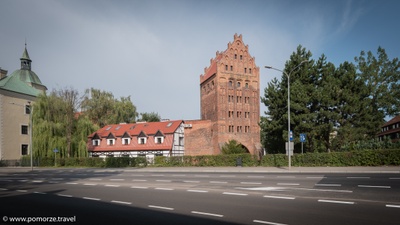
The Mill Gate is a valuable example of Gothic defensive architecture, forming an integral part of Słupsk's medieval fortification system. The gate's name originates from its proximity to a water mill. It is one of two preserved city gates that once protected access to the town. Originally, both the Mill Gate and Holstein Gate had similar structures, with decorative gables and pointed archways. The construction of stone fortifications around Słupsk began after 1325, with walls rising to a height of 6.5 meters, encircling the town. The Mill Gate, erected between 1325 and 1329, initially had a brick lower part and a wooden superstructure. Between 1365 and 1370, the gate was raised and left open on the town side, and in the mid-15th century, a western façade was added, closing the structure while keeping the passageway open. In the 18th and 19th centuries, as defensive needs diminished, the medieval fortifications began to serve other purposes, and many of them were destroyed. The Mill Gate survived as a testament to the city's former defensive might. Interestingly, the oldest part of today's museum complex is a small connector between the Mill Gate and the Manor House, which is also the highest preserved fragment of the city walls.