Hannemann Chapel – History and Legacy of the Frisian Family on Kashubia
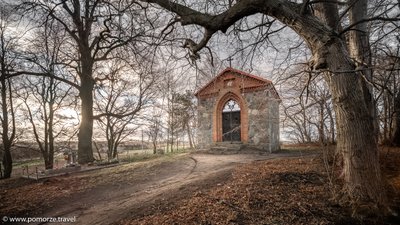
The Hannemann family likely originated from Frisia, a region along the modern-day border of Germany and the Netherlands, and arrived in Kashubia in the early 17th century. The first Frisians settled in Karwieńskie Błota in 1599, brought by Jan Wejher. They specialized in draining the marshy coastal areas of the Baltic Sea, a valuable skill for reclaiming these lands. Martin Hannemann probably arrived in Kashubia around 1606. Over time, the Frisians began to take over reclaimed and cultivated land, and the Hannemann family managed numerous estates in the Puck and Wejherowo districts, including Łebcz, Łyśniewo, Poczernin, Połczyno, Rumia, Gniewino, Rybno, and Janowo (now a district of Rumia). The family also settled in Puck, Sopot, and Gdańsk, where the Hannemanns served as councilors, engaged in trade, and were entrepreneurs, with some even serving as officers in the Prussian army. The first mentions of Hannemanns associated with the Mieroszyno estate date back to before 1766, when it was leased by Ernest Hannemann. In 1819, Johann Franz Mathias Hannemann became the tenant of the estate. He and his wife, née Hasse, had five sons and two daughters. The Hannemann family cultivated the land in Mieroszyno until 1945. Little of the estate has survived; the manor house built by the Hannemanns burned down in 2006, and the manor park remains only in a sparse form. Between 2005 and 2009, the family chapel, built in 1847, was restored, where eleven family members are laid to rest. Those who survived World War II were buried in Gustrow, Mecklenburg-Vorpommern. In 2019, Walter Hannemann, the son of Gdańsk merchant Willy, passed away in Vancouver.