From Cistercians to Benedictines - The Żarnowiec Monastery Through the Ages
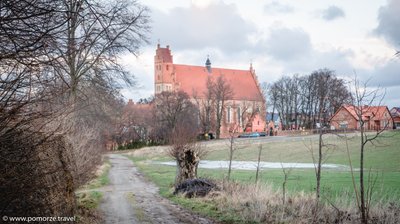
The origins of the monastery in Żarnowiec date back to the 13th century, when around 1235 the Cistercians of Oliwa founded a monastery for nuns. The first documents confirming the existence of the community come from a papal bull of Innocent IV from 1245, which mentions "the seat of the nuns near the lake". The brick-built monastery complex, erected at the turn of the 14th and 15th centuries, included the church of the Assumption of the Blessed Virgin Mary, with a characteristic tower above the western entrance, a gable roof and star vaults.
In 1589, as a result of the weakening of the Cistercian community due to the influence of the Reformation, Bishop Hieronim Rozdrażewski handed over the monastery to the Benedictines of Chełmno. The nuns developed their activities, opening a school for girls where, among other things, artistic embroidery was taught, and also beautifying the church with Baroque furnishings. To this day, the richly decorated main altar from around 1700, side altars, an 18th-century baptismal font, a Rococo pulpit, and a Gothic Pietà from around 1430 attract attention. In the temple, you can also admire painted stalls, brackets in the shape of human faces and angels, and silver vestments of Mary and the Archangel Gabriel, made in 1740 by the Gdańsk goldsmith Jan Gotfryd Schlaubitz.
The monastery was closed in 1834 by the Prussian authorities, and its property was taken over by the state treasury. The last nun died in 1866, and part of the monastery buildings were demolished. After World War II, in 1946, the Benedictines returned to Żarnowiec, reactivating the community and reviving the spiritual tradition of this place, which continues to this day.