Arcade House "Little Dutchman" in Żelichowo – A Living Testament to Żuławy Tradition
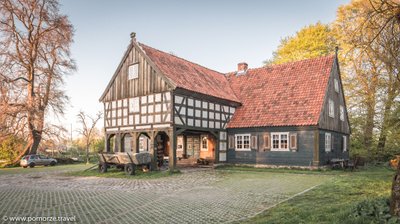
The history of the arcade house "Little Dutchman" dates back to the 18th century when the Fuge family, farming in the Żuławy region, built it in Jelonki near Pasłęk. The building underwent a significant renovation in 1843, during which an arcade was added, not only serving a practical purpose but also symbolizing the owner's status. Initially, the arcade functioned as a granary, where carts could pull up and grain sacks could be loaded through a ceiling hatch. In the 19th century, arcades became fashionable, and farmers competed by adding decorated columns, symbolizing the amount of land they owned. In the case of the "Little Dutchman," the five columns suggested an estate of around 80 hectares. The house has survived numerous renovations and reconstructions, retaining traces of its past, including the original wall colors and layers of wallpaper accumulated over the years. In 2003, new owners acquired it at the price of firewood and then relocated it to Żelichowo, near the Tuga River bend, adjacent to the St. Nicholas church. The relocation and restoration process lasted ten years. Thanks to meticulous documentation, the original layout and about 40% of the original material were preserved.
The wooden structure, set on a stone foundation with a deep frame-supported arcade and five columns, exemplifies Żuławy architecture. The original interiors were recreated: a dark kitchen, a large hall, a bedroom, and other rooms, while painted plates now adorn the walls. In the bathroom, one can admire tiles with traditional Żuławy patterns. The name "Little Dutchman" refers to an old inn that once operated here. The house is also known as the "Cheese House," thanks to Jacek Opitz, son of the owner, who revived the taste of the legendary Werderkäse cheese, once popular in Żuławy.